
Can You Paint a Commercial Building Exterior Without Closing It?
Yes. Commercial exterior painting in Chicago can be done while a hotel, office building or storefront stays open, as long as the work is planned in protected zones, kept overhead and away from walkways, and timed around the weather. Spotless Cleaning Chicago paints occupied commercial properties across Illinois, Indiana and Wisconsin, and Spotless Facility Group is listed with Honors in ISSA’s CIMS directory.
Certified & Compliant: ISSA CIMS with Honors · OSHA trained · $10M insured · BBB A+ · Avetta Safety Star · In business since 2008
Here’s what that looks like on a real job: our team repainting a Chicago-area hotel’s entrance canopy while guests kept coming and going.
Transcript
At a hotel, the guest experience starts before anyone walks through the front door. Recently, our team at Spotless completed a large exterior improvement project for one of our hotel clients. The full project included landscaping, painting, and other exterior work, but I want to highlight one part of it: painting the canopy and the hotel’s front entrance.
For a hotel, exterior painting isn’t just about changing the appearance. The entrance is exposed to weather, daily activity, and a constant flow of guests, so proper prep and a professional application really matter.
The hotel remained open throughout the project, so our team kept the work area protected and organized while completing the job to a professional commercial standard.
Painting is just one of the many ways that Spotless Cleaning helps businesses maintain and improve their facilities. If your property needs commercial painting or other facility services, give us a call at Spotless Cleaning Chicago, (312) 488-1113. Thank you.
Why the Entrance Is the Hardest Part of an Exterior Repaint
At a hotel, the guest experience starts before anyone walks through the front door. The same is true for an office lobby or a retail entrance. It’s the part of the exterior people see up close, and it’s also the part that takes the most abuse: weather, daily vehicle activity and a constant flow of people underneath it.
Entrances are also where commercial exterior painting is most visible from below. On a canopy, every beam, support and underside is in a guest’s line of sight, so thin coverage or drips show immediately. That’s why proper prep and a professional application matter more here than anywhere else on the building.
How an Occupied Building Gets Painted, Step by Step
Commercial exterior painting on an occupied building comes down to four stages: walk the property, set up a protected work zone, prep and paint overhead, then wrap up cleanly. On the hotel project, the canopy was one part of a larger exterior improvement that also included landscaping, and the hotel stayed open the entire time.
1. Walk the Property and Decide What Stays Open
Every occupied-building job starts with a walkthrough. The crew identifies each surface to be painted, its condition and the prep it needs. Just as important, the property and the contractor agree on which entrances, walkways and parking areas must stay usable, and when the property is busiest.
For a hotel, that’s the front entrance and the drop-off lane. For an office building or retail center, it’s the doors and paths tenants and customers use every day. This is the stage where disruption gets designed out, before a single lift shows up.
2. Set Up a Protected Work Zone
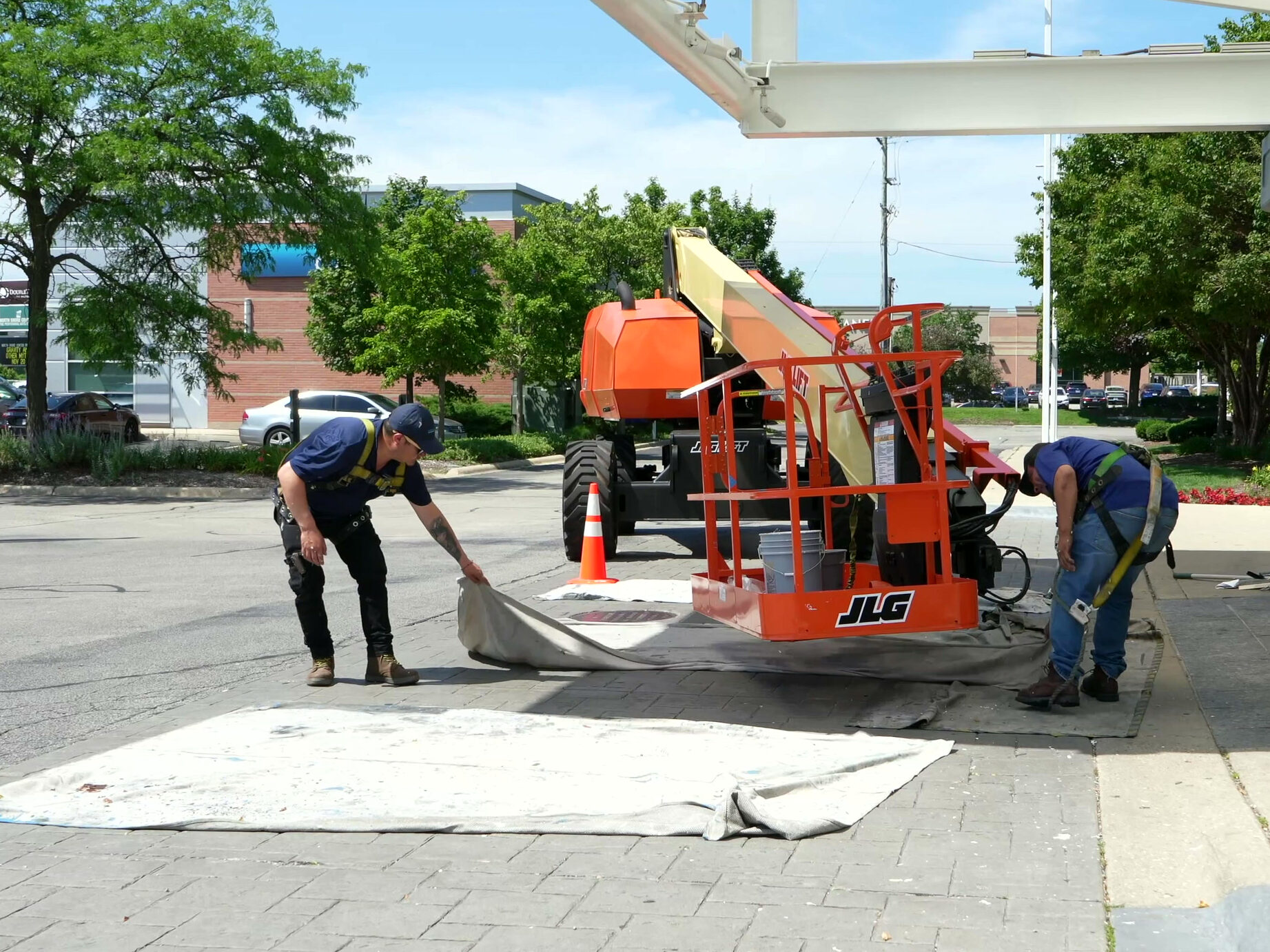
Before any paint goes up, the ground below gets covered. On the hotel job, our crew laid protective coverings on the pavement under the canopy, placed cones, and staged the lifts away from the main guest path.
The result is a small, clearly marked work area. Guests can see where the work is happening, and the entrance stays usable around it.
On a busy property, it also helps to move lifts during quieter hours and to tell front-desk or building staff where the work zone will be each day, so they can point guests and tenants the right way.
3. Prep the Surface, Then Paint Overhead
Paint holds only as well as the surface beneath it. Sherwin-Williams notes that chalky residue left on a surface keeps new paint from adhering, and that the surface must be dry. On metal, like most canopies, painters use named methods from SSPC surface preparation standards, such as solvent cleaning (SP 1) and hand or power tool cleaning (SP 2 and SP 3).
Then the painting happens overhead, from aerial lifts. OSHA’s aerial lift standard, 29 CFR 1926.453, allows only authorized persons to operate a lift and requires workers to stand on the basket floor with a lanyard attached to the boom or basket.
Working from lifts does double duty on an occupied property: it’s the safe way to reach a canopy, and it keeps the crew above the walkway instead of in it.
4. Wrap Up and Walk the Finished Work
A clean finish matters as much as a clean start. Wrap-up should include:
- Marking freshly painted areas until they’re dry
- Pulling up ground protection and clearing cones and equipment
- A final walkthrough of the finished surfaces with the property
When it’s done right, the only sign the crew was there is a refreshed entrance, finished to a professional commercial standard without closing the front door.
When Is the Best Time for Commercial Exterior Painting in the Illinois, Indiana, and Wisconsin area?
Late spring through early fall is the most dependable window, but the paint decides, not the calendar. Sherwin-Williams lists 50°F as the traditional minimum for latex exterior paint, says some newer products can go on as low as 35°F, and recommends staying above the dew point for at least 48 hours after application.
In Chicago, the overnight low and the morning dew are usually what limit a spring or fall commercial exterior painting job, not the afternoon high. If you want your exterior done before peak season, schedule the walkthrough a few months ahead so the work lands in a good weather window.
Questions to Ask Before You Hire a Commercial Painter
- What prep will each surface get, and will that be written into the scope?
- Which coating will you use, and can I see its technical data sheet?
- Which entrances and walkways stay open, and where will equipment be staged?
- Who operates the lifts, and what fall protection do your crews use?
- If the building is older, how will you check for lead in the existing paint? (OSHA’s lead in construction standard covers painting and repair work where lead is present.)
- Can you send a certificate of insurance naming our property?
A commercial exterior painting contractor who answers these clearly at the walkthrough is usually the one who’ll run a clean job. Hiring a cleaning vendor too? See how to choose a reliable commercial cleaning company in Chicago.
Painting Is One Part of Keeping a Property in Shape
Painting is just one of the ways Spotless helps businesses maintain and improve their facilities. On the hotel project, the canopy was painted as part of a wider exterior refresh. You can read how the pieces fit together in our hotel exterior maintenance case study.
Alongside commercial and industrial painting, we provide power washing, drone cleaning, epoxy flooring and commercial cleaning, coordinated by one account manager, so a property manager has one contact instead of a vendor for every trade.
We’ve been in business since 2008. We’re OSHA trained, carry a $10M insurance policy, hold a BBB A+ rating and Avetta Safety Star, and have a 4.9 rating from 100+ reviews. ISSA CIMS certification requires meeting 100% of mandatory and 60% of recommended management-system elements in each section, according to ISSA, and you can look up our listing yourself.
Planning commercial exterior painting for your property? Book an exterior painting walkthrough or call (312) 488-1113. We’ll map out what needs painting, what stays open, and the right weather window for your property.
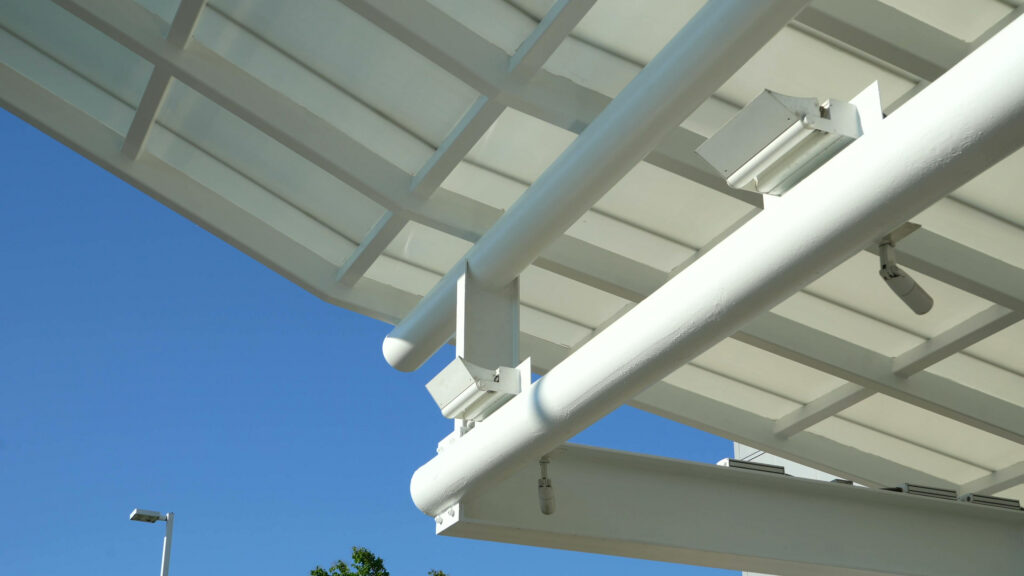
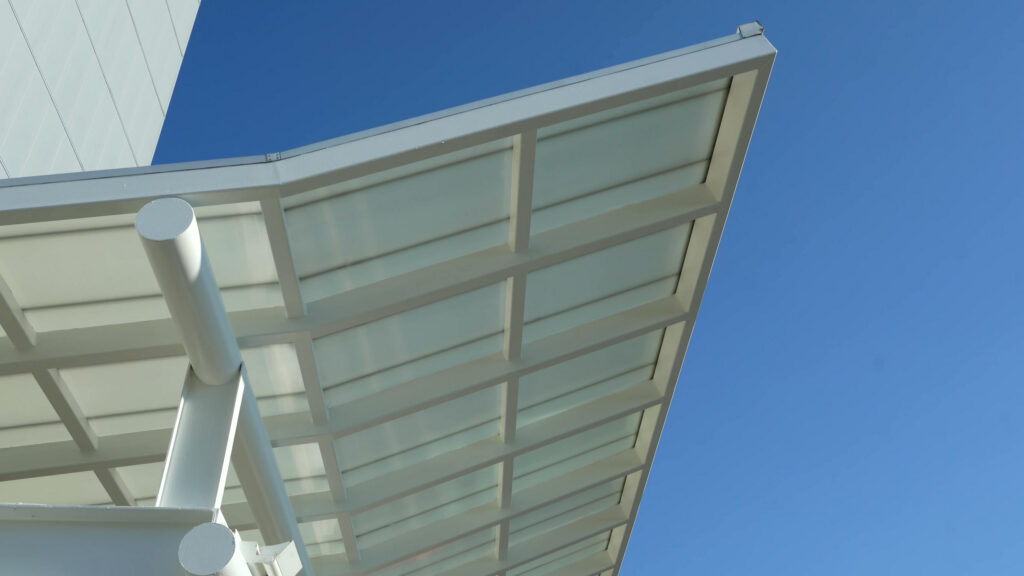
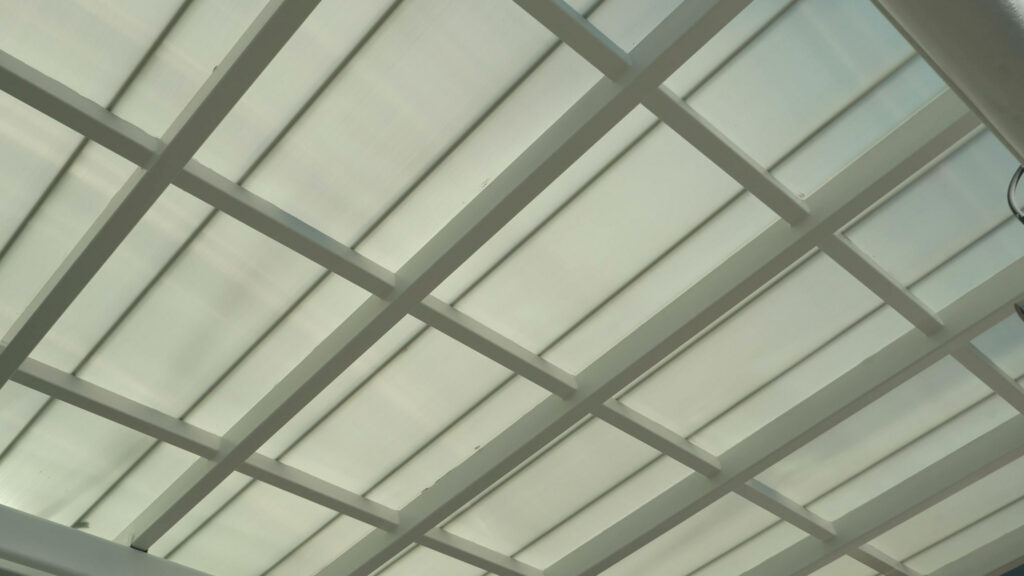
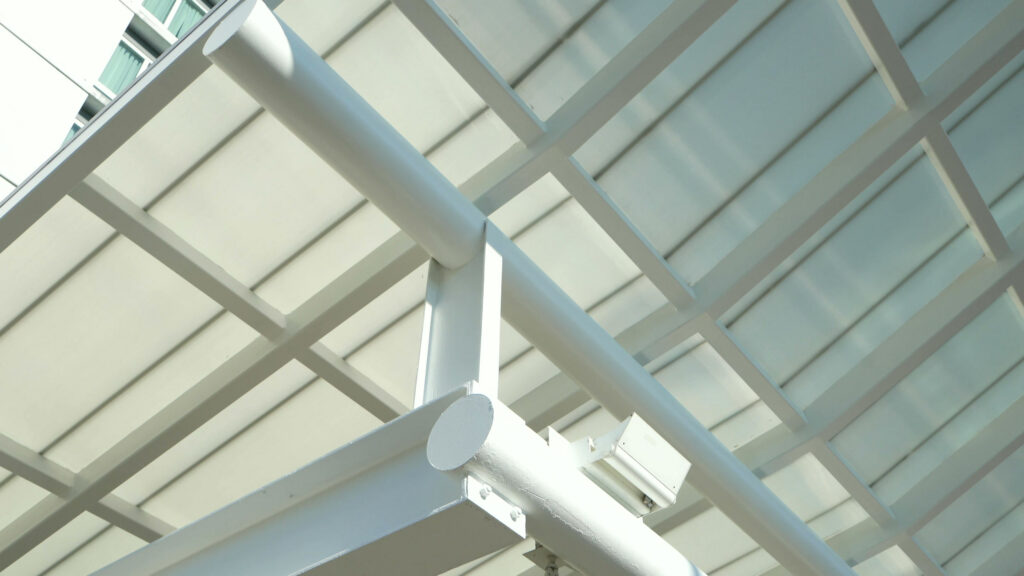
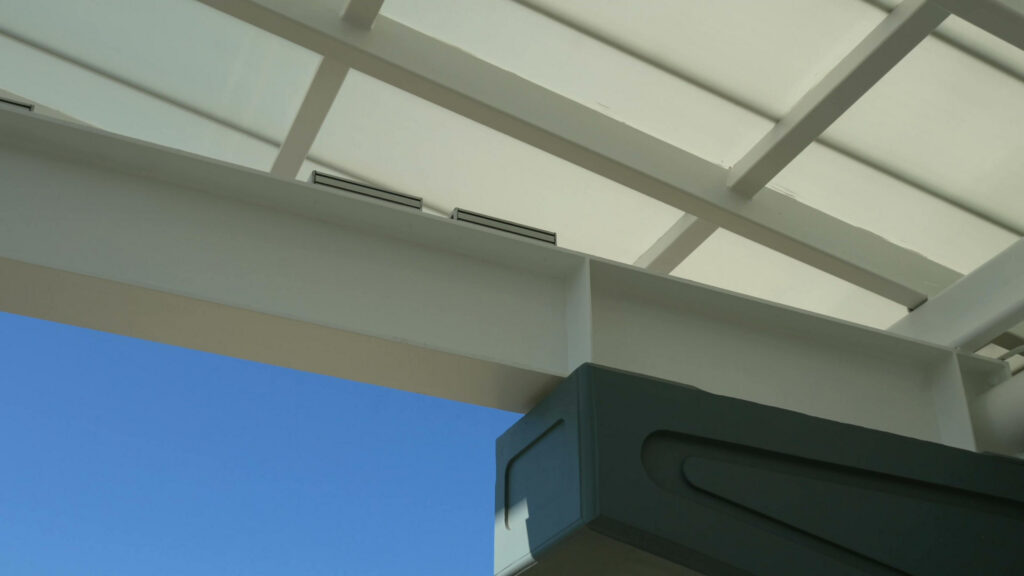
The finished canopy: clean, even coverage on the beams and support tubes guests see from below. Swipe or scroll to see more →
Commercial Exterior Painting FAQs
Yes. Spotless repainted a Chicago-area hotel’s entrance canopy while the hotel stayed open by working from aerial lifts, protecting the ground below, and keeping the work zone marked and organized so guests could still use the entrance.
It depends on surface area and height, the material being painted, the condition of the existing coating, how much prep is needed, the coating system, lift access, and whether the building stays open. A walkthrough is the only way to price it accurately.
It depends on the product. Sherwin-Williams lists 50°F as the traditional minimum for latex exterior paint, with some newer products rated down to 35°F, and recommends staying above the dew point for 48 hours after application.
Paint bonds to whatever is underneath it. Dirt, chalking, loose paint or moisture left on the surface keep the new coating from adhering, which leads to early peeling, especially on entrances exposed to weather and heavy traffic.
Yes. OSHA’s aerial lift standard (29 CFR 1926.453) requires workers on a lift to have a lanyard attached to the boom or basket, to stand on the basket floor, and allows only authorized persons to operate the lift.
Yes. Spotless provides commercial painting along with power washing, drone cleaning, epoxy flooring and commercial cleaning, all coordinated by one account manager. The hotel canopy repaint was one part of a larger exterior project that also included landscaping.
Most can. Hotels, office buildings, retail centers and industrial sites can usually stay open during commercial exterior painting when the work is done in protected zones and entrances are sequenced so at least one path stays usable.
OSHA’s lead in construction standard, 29 CFR 1926.62, covers construction work, including painting and repair, where lead is present. Before commercial exterior painting on an older building, ask the contractor how they’ll check for lead and how prep will be handled if it’s found.